I post videos on several social media platforms to support ADHDers in working with, rather than against, their nervous systems. There’s so much material out there aimed at increasing productivity and performance, but not so much that meets the person with ADHD as a human being. My simple videos aim to address that, and this is the main focus of my ADHD Coaching work.
I had been posting regularly on YouTube (a platform I’ve neglected of late, as my videos seem to be taking off on TikTok) and had been engaging with a follower quite frequently. I then posted a video discussing the intersection of LGBTQIA+ identity and neurodiversity. This ex-follower posted saying how disappointing it was to have found someone they thought “really got” ADHD, who had now revealed an agenda. I most certainly do get ADHD, being an ADHDer myself and having spent decades working with neurodivergent folk.
I am not clear on what agenda this previously engaging follower thought I had, but I was sad to see them go in such circumstances. In case you’re worried, reading my posts or watching my videos won’t make you gay. I promise!
What struck me most was not that this person disagreed with me, but that the mention of LGBTQIA+ identity seemed, for them, to somehow invalidate everything I had previously shared about ADHD. As though one truth cancelled out another.
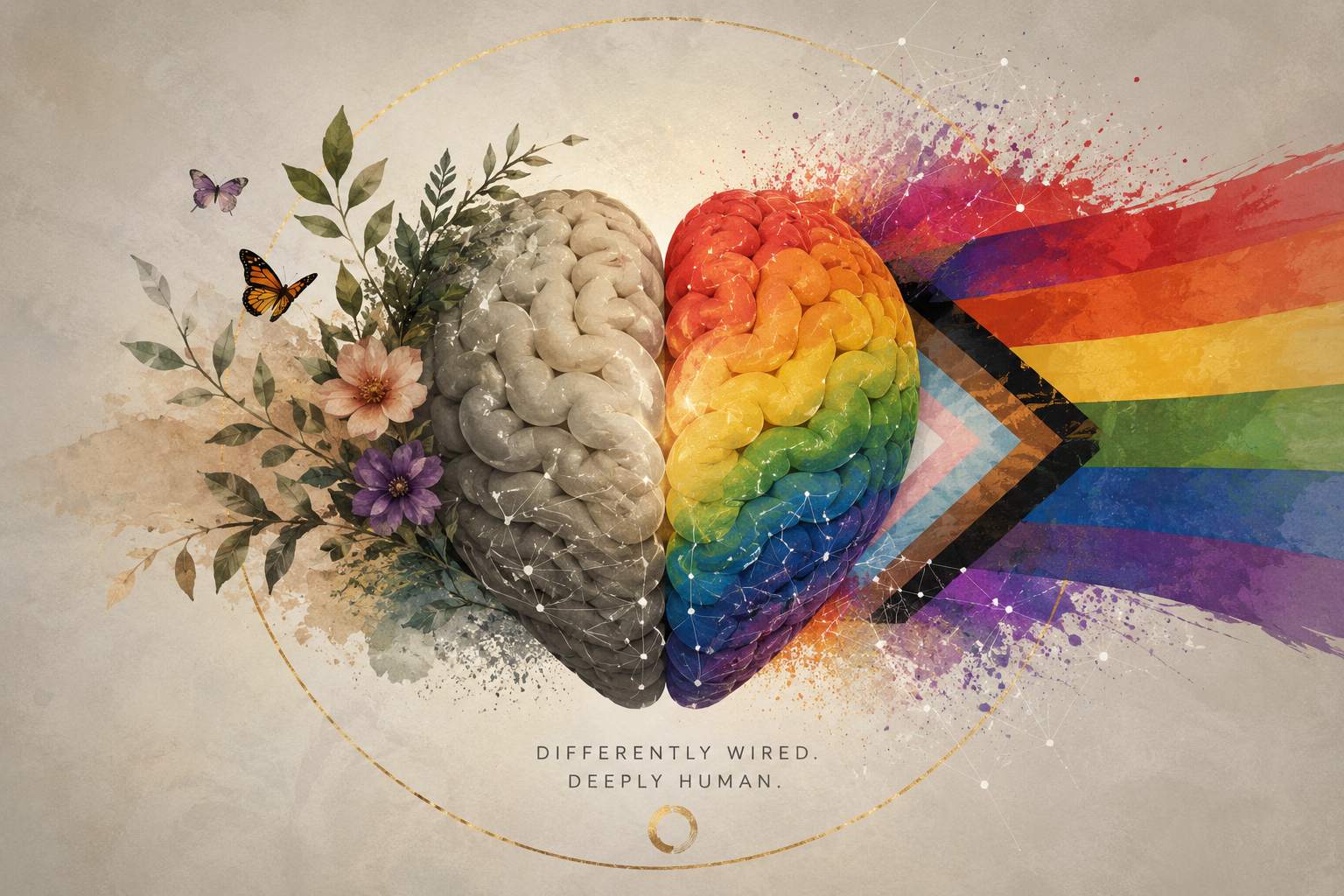
The truth is, there is extensive and well-documented evidence to support a very real intersection between LGBTQIA+ identity and neurodiversity, most especially ADHD. Indeed, in some studies, 61% of ADHD participants reported a non-heterosexual orientation, but more generally, studies report between 30% to 70%, much higher than the neurotypical population.
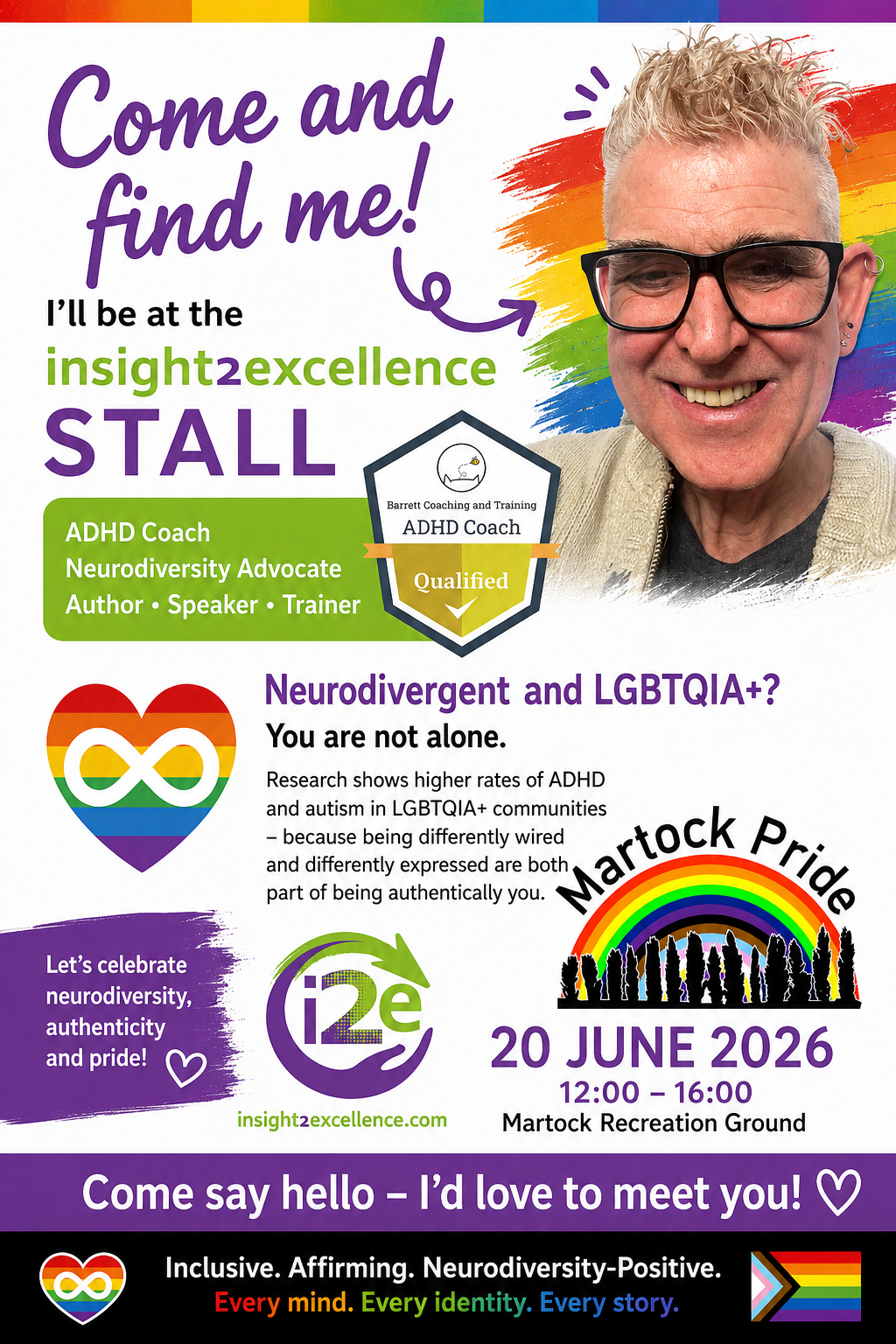
I write this as a neurodiverse gay man. I experience the world differently from my straight, cisgender, neurotypical friends. That doesn’t make either of us wrong or broken; it’s a beautiful expression of the rich diversity of human experience.
I resisted trying to understand why I was queer for many years, and I held my neurodivergence in a similar way. I was raised in an evangelical family where difference was seen as something to cure or to be saved from, so for me, understanding felt pathologised. It was seen as a deviance that required radical treatment. I became wary of self-understanding itself, because understanding had never been offered to me as compassion. It had been framed as a diagnosis, a deviation, and something needing to be fixed.
And this is a very real issue. LGBTQIA+ people experience discrimination and misunderstanding on a daily basis, and so do neurodivergent folk. Bring those two identities together, and the individual can experience a level of trauma that is as compounded as it is deep, and this is often referred to as minority stress.
I still see both not as conditions to diagnose but as people to meet. Human beings with stories, sensitivities, fears, strengths, and ways of experiencing the world that deserve dignity rather than reduction. We share a common humanity, one that becomes richer when difference is welcomed rather than feared.
That being said, the exact causes of this intersection are still being researched, but whilst this research is vitally important for ensuring that neuroqueer people experience equal and positive outcomes, it is equally important to resist generalising. One person's experience is just that, and this underscores the need for all of us to broaden the lens through which we view people and, indeed, life itself. This is what it truly means to celebrate diversity. We don’t treat everyone the same; we recognise, welcome, and applaud difference, and we are enriched as a result.
Much of the research on the intersection of LGBTQIA+ and neurodivergence is still relatively recent. Although no single explanation can fully account for this intersection, current research points to several recurring themes:
Lower Social Conditioning: Neurodivergent individuals tend to be less influenced by conventional societal expectations and social norms, which can lead to greater freedom to explore and express their authentic identities.
Atypical Cognitive Processing: The way neurodivergent brains process information and social constructs can make them more inclined to naturally question and redefine binary models of gender and sexuality.
Community and Visibility: LGBTQIA+ communities often provide safe, accepting spaces for differences, which may attract neurodivergent individuals who feel misunderstood in mainstream environments.
I would gently encourage my lost follower, and anyone else who struggles with the intersection between LGBTQIA+ identity and neurodivergence, to apply the same level of curiosity that many ADHDers bring to ourselves, people, and the world in general.
Diversity is not something to tolerate at a distance. It is something to encounter. Sometimes gently, sometimes imperfectly, but always with openness to the possibility that another person’s experience might expand our understanding of what it means to be human.