My partner of 35 years was diagnosed with Acute Lymphoblastic Leukaemia some time ago and has been going through intensive treatment ever since. As you can imagine, life has been a rollercoaster from that very moment. It feels like being catapulted out of a world one knows so well into a totally alien environment where nothing makes sense, people speak a different language, and everyone else seems to know what’s happening apart from me.
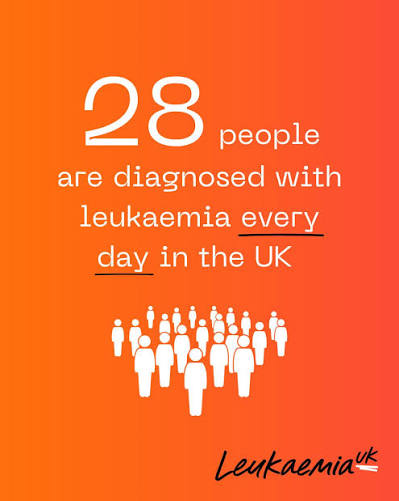
And this happens in a nanosecond.
In that respect, it feels very much like living as a neurodivergent person in a neurotypical world. However, I have years of practice: learning from mistakes, discovering strategies, ditching some and adopting new ones, and growing in awareness. All of which have served to help me navigate what can often feel like a chaotic world.
Landing in this alien medical environment in the blink of an eye has felt like starting over after experiencing a broadside. And that has been exhausting.
Such a diagnosis would send anyone reeling, both the patient and their loved ones, regardless of neurotype. But I have noticed, with interest, the way it has impacted me, and I hope that by sharing some of my experience, I might be able to help others.
As an AuDHDer, I live in a permanent state of tension. I hate routine, but I crave it. I loathe organisation, but I desperately need it. I don’t do detail, but I have an insatiable need to know what's happening. I hate rules and regulations, but I need others to follow them; otherwise, I have no idea what’s going on.
It's always been that way, and it’s made for an interesting, if painful, journey through life.
One of the first things I noticed was an immediate lack of control. I couldn't control what was happening to someone I love, and I couldn't slow what was unfolding in order to understand it. I wanted to shout “STOP” at the top of my voice, but I knew that was socially inappropriate, and delaying treatment was the last thing my partner needed.
For me, life has always felt like managing countless spinning plates, but now I was trying to do this while the carpet was being pulled from beneath me, the room was filling with water, and I hadn’t learnt to swim.
I’ve been called a control freak at various points in my life, with people assuming this is symptomatic of an inflated ego.
It isn’t.
Without some kind of order, I can’t read the room, and if I can’t read the room, then I am lost in overwhelming fear. I feel threatened.
Life has taught me that control, in many ways, is an illusion. For example, I can practise basic road safety when crossing a road, but I can’t control a car having a blowout as it comes around the corner and crashes into me. I can do what I can, but my circle of control is very much limited to taking care of myself.
I cannot control the actions or omissions of others.
So there’s an element of trust involved, and trusting in a world of chaos is far from easy.
So when faced with this broadside, I chose to notice my breathing, how my body felt, and how busy my head was. All without judgement.
This is so hard in a moment of crisis, so practising before trouble hits is preferable.
Over the years, I've discovered that stopping to notice what is happening in my body, mind, and feelings creates space, and that awareness is where the ability to choose lives.
Awareness brings freedom, and freedom introduces choice.
This means I do not have to operate on autopilot, but from a place of knowing.
There is a quotation often attributed to Viktor Frankl that expresses this beautifully:
Between stimulus and response there is a space. In that space is our power to choose our response. In our response lies our growth and our freedom.
I also noticed a desire to run, to escape.
That wasn’t to escape my partner, but to escape my confused head, my hurting emotions, and my fear. It feels like wanting to run away from my body.
My head has always been a mess, a bit like one of those Christmas snow globes, but in my mind, it’s continually being shaken by external forces, and I can’t find my way through.
Over the years, I have used substances, people, entertainment, sex, anything that offers an immediate distraction from what I can’t face.
Of course, the reality is that the thing was still there when I sobered up, staring me in the face. My partner would still be ill. The medics would still be in full flow, treating him.
I can run to the highest mountain to seek solitude and peace, but if I haven’t faced what’s raging within me, it will travel with me.
It will be me, the mountain, the view… and the fear.
People have often said, “You’re AuDHD; how can you possibly sit still long enough to notice what’s going on within you?”
My honest answer is: practise.
It isn’t easy. I still struggle with it. It’s not a quick fix. It’s not an instant remedy.
But I do know that cultivating awareness has given me freedom. I still mess up; I still speak or act on autopilot at times, but those moments happen less often.
Another button this experience has pushed is my seemingly unending ability to ask questions.
My insatiable desire to know everything means a slew of questions comes out of me every time I manage to corner an already overworked medic.
Life is always uncertain. I once heard someone say:
Change is here to stay!
And I get that.
Nothing stands still.
I only have to look in the mirror to see that.
In the midst of serious illness, that reality hits home harder than ever.
A neurodivergent mind constantly seeks certainty, and it does so because it seeks safety. Familiarity can offer that, to a degree. But when something shifts, and you're transported into a new environment with new rules, bright lights, noise, people rushing, loud voices, and a constant sense of urgency, that sense of safety soon evaporates.
My autopilot response is to question. I seek information to understand what’s happening and what’s going to happen.
This may come across as me distrusting the medical team, but it’s me trying to get ahead of every eventuality so that I can feel safe and keep my partner safe.
But that’s impossible.
I will never be across every eventuality. Expecting that asks too much of me and everyone else.
It’s actually unfair.
Of course, in a medical situation, it is right to ask questions. One has to sign a consent form, and obviously, you want to do that from an informed position.

But my head is never satisfied.
I come away feeling content, but only seconds later, new questions form, and that contentment erodes.
I have found that, once again, it’s a matter of stopping and pausing. Asking myself a simple question:
Noticing old patterns and why they exist. Not ignoring the uncertainty and fear that’s there, but embracing it.
My natural desire is to run from these feelings, but freedom comes from doing the opposite.
Actually touching the anxiety, being with the uncertainty, feeling the fear, and telling myself it’s okay to feel like this immediately gives space for the feelings to calm.
As they calm, I may decide to ask two questions, not the 202 that formed in my head!
I remain in the middle of this storm.
The snow globe is still being shaken by external forces, but by bringing my attention inward and tending to what sometimes rages within me, I can be the mountain I once longed to run to.
Solid, stable, and present.